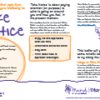
Use this clear, printable prompt sheet to make starting a conversation about eating concerns feel more manageable. It offers simple wording for explaining difficulties with food, meals, body image or guilt after eating to someone safe, including a friend, family member, GP or other healthcare professional.
Designed to support an earlier conversation and help someone access appropriate care, this one-page eating concerns help sheet sets out six practical steps for asking for support. It can be useful for teenagers, young people and adults who are restricting food, skipping meals, eating secretly, feeling distressed about eating, or finding thoughts about food and their body increasingly difficult to manage.
The first section reassures readers that they do not need to identify or name an eating disorder before seeking help. It explains that food, eating or body-related worries affecting daily life are enough reason to speak to someone, which may help people who are unsure whether their experience is “serious enough”.
Further panels encourage the reader to choose a trusted person, describe what is actually happening and write notes or a message if talking aloud feels too hard. Example phrases include saying that meals are being skipped, that stopping feels difficult, or that guilt after eating is taking over their thoughts.
The sheet also suggests asking for practical support, such as help arranging an appointment, company when attending, or someone who will listen without commenting on weight. It is suited to use at home, in school pastoral support, youth work, counselling sessions or GP appointments, where it can help begin a sensitive discussion about disordered eating or eating difficulties.
A final safety message makes clear that eating difficulties can affect people at any body size and advises urgent medical care for fainting, chest pain or serious illness. Created by Edita Stiborova, it offers a calm starting point for someone who needs support before their health worsens.